Benefits of Installing a Flap Barrier in Commercial and Public Buildings
Modern commercial and public buildings require effective access control systems to manage the movement of people, improve security, and maintain an organized entry process. Offices, shopping malls, hospitals, educational institutions, metro stations, and corporate facilities often experience high pedestrian traffic throughout the day. Managing these entry points manually can be time-consuming and may create congestion, unauthorized access, and security challenges.
A flap barrier is a modern access control solution designed to regulate pedestrian movement through designated entry and exit points. It generally consists of retractable flaps, sensors, and an electronic control system that allows authorized individuals to pass through after successful verification. These systems can be integrated with access cards, biometric devices, QR codes, and other identification technologies, depending on the model.
Installing a suitable flap barrier can help organizations improve entry management while providing a convenient experience for employees, visitors, and customers. Understanding its benefits, applications, and essential features can help businesses choose the right solution for their premises.
What Is a Flap Barrier?
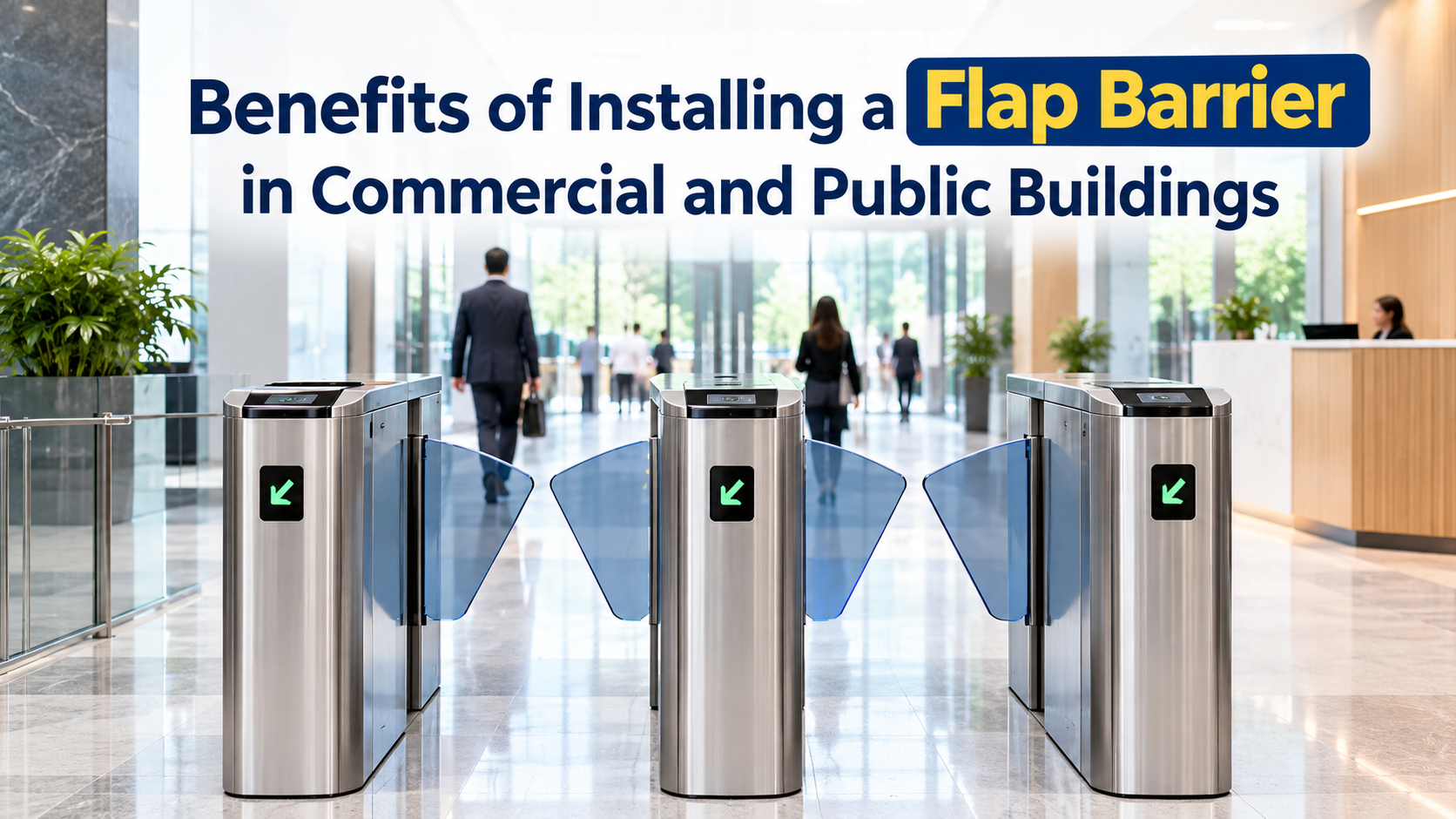
A flap barrier is an automated pedestrian access control device used to manage entry and exit in buildings and restricted areas. It typically features two retractable panels that open when an authorized person is permitted to pass. Once the person crosses the designated area, the panels close automatically.
Unlike conventional gates, flap barriers can work with electronic authentication systems to verify access permissions. This makes them useful for locations where controlled entry, visitor management, and efficient pedestrian movement are important.
Depending on the installation requirements, a flap barrier may be connected to a card reader, fingerprint scanner, facial recognition system, or ticketing solution. The choice of technology depends on the building's security requirements, expected traffic, and existing access control infrastructure.
1. Improved Security and Access Control
One of the main benefits of installing a flap barrier is improved control over who can enter a building. In commercial environments, restricting access to authorized employees, registered visitors, and approved personnel is essential for protecting people, equipment, and confidential information.
When connected to an access control system, the barrier opens only after the user's credentials have been verified. This reduces dependence on manual checking and helps prevent unauthorized entry through monitored access points.
For example, corporate offices can use flap barriers to control access to employee-only areas, while public facilities can establish separate entry routes for staff and visitors. Security personnel can also monitor entry activity through compatible management software.
However, a flap barrier should be considered part of a broader security arrangement rather than a complete replacement for security staff, surveillance cameras, and appropriate emergency procedures.
2. Better Management of Pedestrian Traffic
Busy buildings often experience queues during office opening hours, lunch breaks, shift changes, and public events. Manual entry checks can slow down the movement of people, particularly when multiple visitors need verification.
Flap barriers help organize pedestrian movement by creating designated entry lanes. Automated authentication reduces the need for repeated manual checks and allows authorized users to pass through more efficiently.
When selecting a Flap Barrier in Jaipur, businesses should consider the expected number of users, available installation space, entry and exit requirements, and the speed of the authentication process. Choosing an appropriate configuration can help reduce congestion in offices, commercial complexes, and other busy facilities.
The actual throughput depends on the barrier model, authentication method, lane width, and user behavior. Therefore, selecting a system based on real traffic requirements is important.
3. Convenient Entry for Employees and Visitors
An effective access control system should provide security without making entry unnecessarily complicated. Flap barriers can offer a convenient experience by allowing users to authenticate themselves through compatible access cards, QR codes, or biometric devices.
Employees can use their assigned credentials for routine entry, while visitors may receive temporary access permissions through an integrated visitor management system. This can make the entry process more organized and reduce repetitive administrative tasks.
In buildings with frequent visitors, reception staff can verify appointments and issue suitable credentials before directing visitors to the designated access lane.
The result is a more structured entry experience for both building occupants and guests, provided the system is configured according to the facility's operational requirements.
4. Integration with Modern Access Control Technologies
Modern flap barriers can support different access control technologies, depending on their specifications and compatibility. These integrations help organizations establish a centralized approach to entry management.
Common options include:
- RFID cards and proximity access cards
- Fingerprint recognition systems
- Facial recognition devices
- QR code scanning
- Ticketing and visitor management systems
- Access control software and monitoring platforms
Businesses considering a zkteco flap barrier should review the specific model's supported authentication methods, controller compatibility, software requirements, and integration options before purchasing.
Similarly, a novus flap barrier may be considered when evaluating available access control solutions, but the final selection should be based on verified product specifications, installation requirements, warranty terms, and after-sales support.
Compatibility should always be confirmed with the supplier because not every barrier supports every reader or authentication technology.
5. Professional Appearance for Commercial Buildings
The entrance of a commercial building creates an initial impression for employees, clients, business partners, and visitors. A well-designed access control system can contribute to a modern and organized entrance.
Flap barriers are commonly available in contemporary designs using materials such as stainless steel, glass, and other durable finishes. Their compact structure can suit reception areas, corporate offices, hotels, and commercial complexes where appearance and space management are important.
Organizations can select suitable finishes and lane configurations according to their interior design and security requirements. A coordinated installation can make the entrance appear more professional while keeping pedestrian movement organized.
6. Useful for Different Public and Commercial Facilities
Flap barriers can be installed in a wide range of environments because access control requirements differ from one facility to another.
Corporate offices: They help manage employee entry, restrict access to authorized personnel, and support attendance-related integrations where compatible.
Shopping malls: They can control entry to selected areas, staff-only sections, or restricted facilities without necessarily restricting general public movement throughout the building.
Hospitals: They can help manage access to administrative areas, staff sections, and other controlled zones. Emergency access and patient movement must remain a priority.
Educational institutions: They can support controlled access to administrative buildings, laboratories, libraries, and other designated areas.
Metro stations and transport facilities: Compatible systems can support ticket validation and organized pedestrian flow when designed for the required passenger volume.
Government and industrial buildings: They can help establish controlled entry points for employees, contractors, and approved visitors.
The appropriate system depends on the level of security required, the number of people passing through, and the operational conditions of the facility.
7. Reduced Dependence on Manual Entry Checks
Manual entry management often requires security personnel to check identity cards, maintain visitor records, and monitor access permissions. While staff remain important for supervision and handling exceptions, automated barriers can reduce repetitive checking tasks.
When connected to compatible software, the system can record access events and help administrators review entry activity. This can improve record management and make it easier to investigate unusual access attempts.
Organizations should confirm what information the system records, how long records are retained, and who can access them. Biometric systems and other identity-related technologies should be implemented with suitable privacy and data protection measures.
8. Safety Features and Emergency Considerations
Safety is an essential factor when installing an automated pedestrian barrier. Depending on the model, flap barriers may include infrared sensors, obstacle detection, anti-tailgating functions, and automatic panel control to help manage pedestrian movement.
These features can help detect a person or obstruction in the passage area and support safer operation. However, the availability and effectiveness of individual functions vary by model and installation.
Before purchasing a system, organizations should check sensor coverage, lane dimensions, accessibility requirements, emergency release arrangements, and behavior during power failure.
The installation must also comply with applicable fire safety and building requirements. Emergency exits and evacuation routes should never depend on an access control process that could prevent people from leaving safely. Facilities with children, elderly visitors, or people with disabilities should assess whether an accessible alternative lane is needed.
9. Long-Term Operational Value
The overall value of a flap barrier depends on more than its initial purchase price. Businesses should consider installation, integration, maintenance, spare parts, warranty coverage, and expected usage when evaluating the investment.
A suitable system can support consistent access management and reduce some repetitive manual tasks. However, reliability depends on product quality, correct installation, environmental conditions, and regular maintenance.
Organizations should establish a maintenance schedule that includes cleaning, sensor inspection, testing of moving components, and verification of access control connections. Any malfunction should be handled according to the manufacturer's instructions by qualified service personnel.
Comparing the total cost of ownership can help businesses select a system that meets their requirements over the expected service life.
10. How to Choose the Right Flap Barrier
Selecting the right flap barrier requires a clear understanding of the building's security and operational needs. Before making a decision, consider the following factors:
- Traffic volume: Estimate how many people will use the entrance during peak hours.
- Authentication options: Confirm compatibility with access cards, biometrics, QR codes, or other required technologies.
- Lane configuration: Select the number and width of lanes according to available space and accessibility needs.
- Safety functions: Check sensor coverage, obstacle detection, and emergency operation.
- Build quality: Evaluate materials, operating conditions, and expected usage.
- Software compatibility: Ensure that the barrier can integrate with the existing access control platform.
- Service and maintenance: Review warranty coverage, spare parts availability, and local technical support.
- Total cost: Consider installation and ongoing operating expenses, not only the initial price.
Requesting a demonstration and reviewing the technical documentation can help decision-makers compare different models more accurately.
Conclusion
Flap barriers offer a practical way to improve pedestrian access management in commercial and public buildings. They can support better security, organized entry, convenient authentication, reduced manual checking, and integration with modern access control technologies.
The best results come from selecting a system that matches the building's traffic volume, safety requirements, authentication needs, and available space. Organizations should also consider maintenance, accessibility, emergency procedures, and after-sales support before making a purchase.
Whether a facility is evaluating a zkteco flap barrier, a novus flap barrier, or another suitable solution, comparing verified specifications and installation requirements is essential. A carefully selected and properly maintained flap barrier can become a valuable part of a building's overall access control strategy.
Frequently Asked Questions
1. What is a flap barrier?
A flap barrier is an automated pedestrian access control system that uses retractable panels to regulate entry and exit. It can be integrated with access cards, biometric readers, QR codes, and other authentication technologies.
2. What are the main benefits of installing a flap barrier?
The main benefits include improved access control, organized pedestrian movement, convenient authentication, reduced manual entry checks, and integration with modern security systems.
3. Where can flap barriers be installed?
Flap barriers are suitable for corporate offices, shopping malls, hospitals, educational institutions, metro stations, government buildings, and other facilities requiring controlled pedestrian access.
4. What should I consider when choosing a Flap Barrier in Jaipur?
Consider pedestrian traffic volume, authentication options, installation space, safety features, product quality, maintenance requirements, warranty, and local technical support.
5. What is a ZKTeco flap barrier used for?
A ZKTeco flap barrier can be used to manage pedestrian access in commercial and institutional facilities. Buyers should verify the selected model's specifications and compatibility with their existing access control system.
6. What is a Novus flap barrier?
A Novus flap barrier refers to a barrier product offered under the Novus name. Before purchasing, check the specific model's operating features, authentication compatibility, safety functions, and service support.