How X-Ray Bag Scanners Help Detect Prohibited Items
Security screening has become an important part of protecting airports, railway stations, shopping malls, hospitals, hotels, corporate offices, and government buildings. These locations receive visitors carrying backpacks, handbags, suitcases, and other personal belongings throughout the day. Examining every bag manually can take considerable time, especially during busy hours. X-ray baggage screening systems help security personnel inspect bag contents efficiently without routinely opening each item.
An X-ray bag scanner uses imaging technology to reveal objects inside luggage. Trained operators examine these images to identify suspicious items and determine whether additional inspection is necessary. Organizations planning to improve their security arrangements can consult experienced X Ray Bag Scanner Dealers to understand the available equipment, technical specifications, and suitable screening solutions.
Understanding how these systems work, what they can identify, and where they are used can help organizations make informed security decisions.
What Is an X-Ray Bag Scanner?
An X-ray bag scanner is a security screening machine that uses X-ray radiation to generate images of objects inside bags and luggage. Unlike manual inspections, which require security personnel to open a bag, an X-ray scanner allows operators to examine its contents externally.
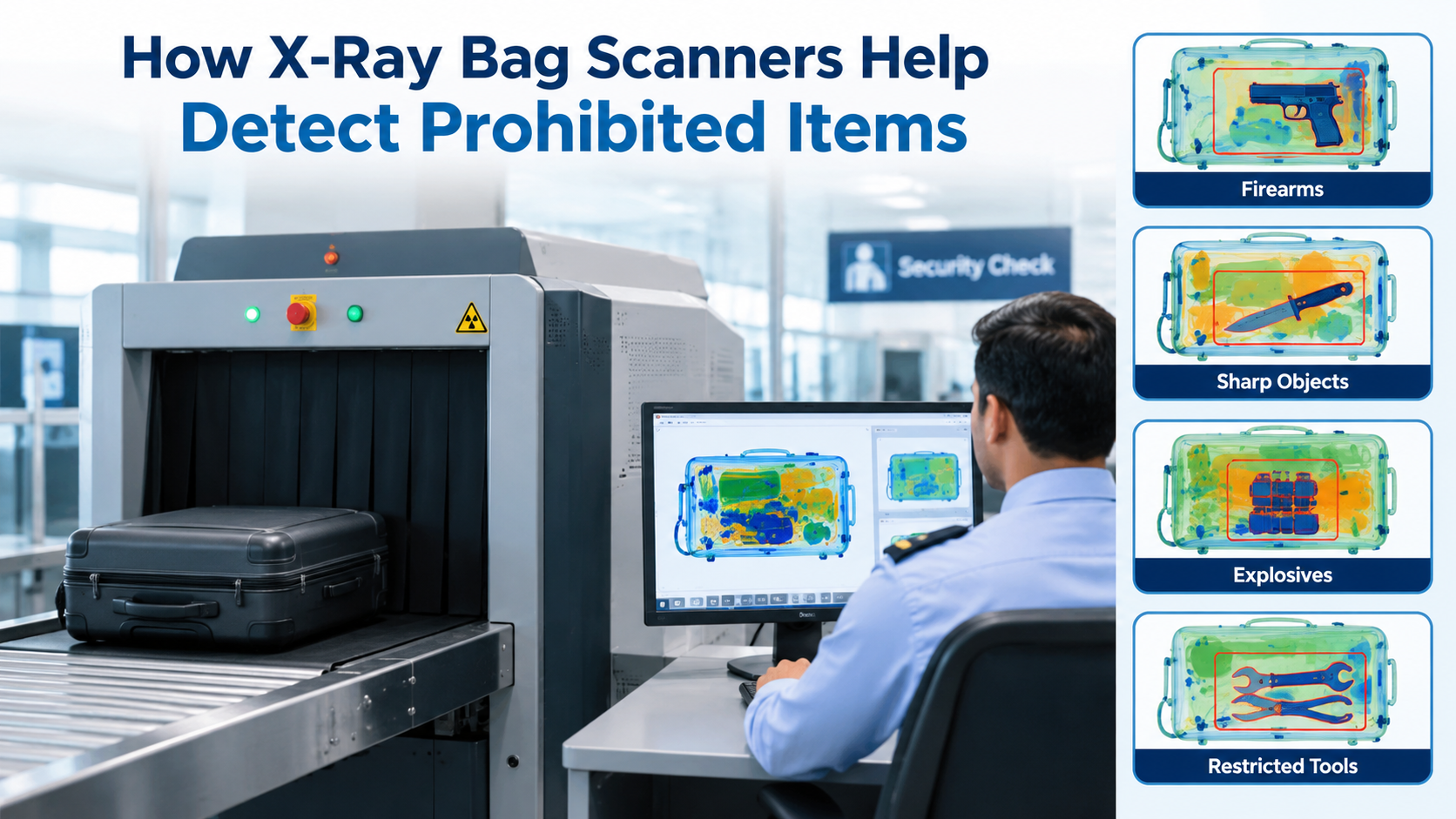
Most systems feature a conveyor belt that transports baggage through a scanning tunnel. An X-ray source directs radiation through the bag, while detectors measure the radiation that passes through different materials. The system processes this information and displays an image on a connected monitor.
Different materials absorb or transmit X-rays differently, depending on their composition, density, and thickness. These variations help operators distinguish objects such as electronic devices, metal tools, clothing, and other personal belongings.
Modern equipment may also include image enhancement, zoom functions, material discrimination, and automated threat alerts. The availability of these features depends on the model and its configuration.
How Do X-Ray Bag Scanners Help Detect Prohibited Items?
X-ray scanners help identify objects that may violate the security rules of a particular facility. The process involves several stages that combine imaging technology with human assessment.
1. Baggage Enters the Scanning Tunnel
The screening process begins when a person places a bag on the conveyor belt. The belt carries the luggage through the scanner's inspection tunnel, where the system examines its contents.
The tunnel incorporates shielding and safety mechanisms designed to control radiation during normal operation. Equipment should be installed, operated, and maintained according to manufacturer instructions and applicable safety requirements.
2. X-Rays Pass Through the Bag
Inside the tunnel, X-rays pass through the baggage and its contents. Different materials interact with the radiation in different ways, producing variations in the information collected by the scanner.
For example, a metal object may appear differently from clothing, paper, plastic, or electronic components. These differences help the imaging system create a representation of the objects inside the bag.
3. Detectors Generate an Image
Detectors capture the transmitted X-rays and convert the measurements into electronic signals. The scanner's processing system then creates an image for the operator.
Depending on the equipment, the image may use different colours or shades to represent material characteristics. Advanced models can provide additional imaging features that help operators examine overlapping objects and areas of interest.
4. Security Personnel Examine the Image
A trained operator reviews the displayed image and looks for unusual shapes, suspicious objects, or items that may be restricted under the facility's security policy.
The scanner supports the operator's assessment, but its results are not infallible. Dense packing, overlapping objects, image quality, and equipment capabilities can affect the interpretation of baggage contents.
5. Suspicious Bags Receive Further Inspection
When an image raises concerns, security personnel follow established procedures for additional screening. Depending on the situation, this may involve a physical inspection, another approved detection method, or referral to authorized security staff.
This combination of technology and human judgment helps organizations manage potential threats more systematically.
What Types of Prohibited Items Can Be Identified?
X-ray baggage scanners can help operators identify various objects that may require further inspection. Actual detection depends on the item's size, shape, material, position, and the capabilities of the scanning equipment.
Weapons and Sharp Objects
Knives, blades, firearms, and certain weapon components may be visible in suitable X-ray images. Their shapes and material characteristics can help operators recognize objects that require closer examination.
The rules governing these items vary between airports, commercial buildings, government facilities, and other locations.
Suspicious Materials and Objects
Certain objects associated with potential explosive threats may be identified through their appearance or flagged by specialized detection systems. However, a conventional X-ray scanner cannot reliably identify every explosive substance from an image alone.
Facilities with higher security requirements may combine baggage scanning with other approved detection technologies.
Tools and Restricted Equipment
Metal tools, heavy objects, and equipment restricted by a facility's policies can often be seen inside luggage. Security personnel can assess whether an object requires additional screening based on the site's rules and the circumstances.
Concealed or Unusual Items
Objects hidden beneath clothing, books, electronics, or other belongings may become visible during scanning. Unusual arrangements or unexpected components can alert operators to the need for closer examination.
However, overlapping objects may obscure important details, making additional screening necessary.
Where Are X-Ray Bag Scanners Commonly Used?
X-ray baggage screening systems support security operations in several types of facilities.
- Airports: Help examine passenger baggage and identify items restricted under aviation security rules.
- Railway and metro stations: Support baggage screening at designated security checkpoints.
- Shopping malls: Assist security personnel in inspecting bags when required by the facility's policies.
- Hotels and convention centres: Support security arrangements during conferences, exhibitions, and large gatherings.
- Hospitals: Help manage access to sensitive areas where baggage screening is appropriate.
- Corporate and government offices: Support entry screening at restricted premises.
- Industrial facilities: Assist with baggage inspections at locations with specific security requirements.
The appropriate scanner depends on the expected baggage volume, available space, screening objectives, and the level of security required.
Important Features to Consider Before Purchasing a Scanner
Selecting an appropriate baggage scanner requires careful consideration of its technical specifications and operational requirements.
Image Quality and Detection Assistance
Clear imaging helps operators examine objects more effectively. Depending on the application, useful features may include image enhancement, zoom, material discrimination, and automated threat alerts.
Tunnel Size and Conveyor Speed
The scanning tunnel must accommodate the types of bags commonly carried into the facility. Locations screening large suitcases may require a different tunnel size from those primarily handling handbags and small backpacks.
Conveyor speed should also support the expected screening volume without compromising inspection procedures.
Safety Features and Regulatory Compliance
Buyers should evaluate radiation shielding, safety interlocks, emergency controls, installation requirements, and applicable regulatory standards. Proper operator training and routine maintenance are also essential.
Warranty and Technical Support
Before purchasing equipment, organizations should review warranty conditions, spare-part availability, maintenance arrangements, installation support, and service response times.
These factors contribute to reliable operation and help organizations plan for the long-term costs of their security systems.
How to Choose a Suitable X-Ray Security Scanner Supplier
Finding a suitable supplier is an important step when planning baggage screening for a commercial or institutional facility. Buyers should compare product specifications, technical assistance, installation services, and ongoing support rather than relying on price alone.
Organizations searching for an X-ray Security Scanner Jaipur supplier should evaluate whether the provider can explain the available models, demonstrate relevant features, and recommend equipment according to the site's security requirements.
It is also helpful to confirm the supplier's experience, warranty coverage, operator training arrangements, and ability to coordinate maintenance. A product demonstration can help decision-makers understand the scanner's imaging capabilities and limitations before making a purchase.
For organizations operating multiple facilities, service availability across different locations may be an additional consideration.
Best Practices for Effective Baggage Screening
Even advanced scanning equipment requires consistent procedures and trained personnel. Organizations can improve their screening operations by following these practices:
- Train operators regularly: Ensure staff understand image interpretation, equipment controls, and escalation procedures.
- Schedule preventive maintenance: Follow the manufacturer's recommendations to maintain equipment performance.
- Apply consistent screening policies: Establish clear procedures for suspicious images and secondary inspections.
- Review unclear images carefully: Refer bags for additional screening when important details cannot be interpreted confidently.
- Use complementary security measures: Combine baggage scanning with access control, physical inspections, and other appropriate detection methods.
- Maintain necessary records: Document equipment servicing, inspections, and operator training where required.
These practices help organizations use X-ray technology as one component of a comprehensive security strategy.
Why Baggage Scanner Selection Matters in Rajasthan
Organizations across Rajasthan may require baggage screening solutions for offices, hotels, educational institutions, industrial facilities, transport locations, and other public-facing premises. Their requirements can vary according to visitor numbers, baggage sizes, operating conditions, and security policies.
When comparing options for a Baggage scanner in Rajasthan, buyers should assess the equipment's specifications, installation requirements, service availability, and suitability for their particular facility.
It is important to verify applicable regulatory requirements and obtain technical guidance before installation. A properly selected scanner, supported by trained operators and routine servicing, can help improve the consistency of baggage screening.
Conclusion
X-ray bag scanners play an important role in modern security operations by producing images of objects inside luggage. They help trained operators identify weapons, sharp objects, suspicious items, and other objects that may require additional inspection.
However, scanning equipment cannot guarantee the detection of every prohibited item. Its effectiveness depends on image quality, equipment capabilities, operator training, and established security procedures.
Organizations should evaluate their screening requirements, compare technical specifications, and consider installation, safety, maintenance, and after-sales support before purchasing a system. Choosing suitable equipment and following consistent screening practices can help create a more organized and reliable security environment.
Frequently Asked Questions
1. What is the main purpose of an X-ray bag scanner?
Its primary purpose is to generate images of baggage contents so trained security personnel can identify suspicious objects and determine whether further inspection is required.
2. Can an X-ray bag scanner detect all prohibited items?
No. Detection depends on the item's characteristics, its position inside the bag, image quality, and the scanner's capabilities. Some materials require specialized detection equipment.
3. Are X-ray bag scanners suitable for commercial buildings?
Yes. They can support baggage screening in offices, shopping malls, hotels, industrial facilities, and other locations where screening is appropriate.
4. What should buyers check before purchasing a baggage scanner?
Buyers should evaluate image quality, tunnel dimensions, conveyor speed, safety features, regulatory compliance, warranty, maintenance, and technical support.
5. Why is operator training important?
Trained operators can interpret images more effectively, recognize suspicious objects, identify unclear scans, and follow appropriate procedures for additional inspection.